
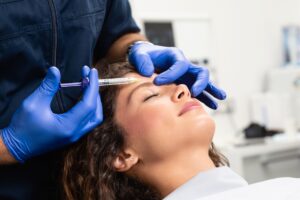
Many people seeking to improve their appearance are surprised to learn that the same person who takes care of their teeth can also help them maintain a younger-looking visage. This is because many dentists are licensed to offer Botox injections to reduce fine lines in the face.
But this treatment hasn’t always been used for this purpose. Continue reading to learn more about how it evolved to become the popular cosmetic service that it is today!
What is Botox?
Botox is the brand name of an injectable prescription containing a safe dosage of botulinum toxin, which is a protein derived from the bacterium Clostridium botulinum. It works by blocking nerve signals in the muscles it’s injected into, causing them to stop contracting and relax. The skin resting above them becomes smoother as a result.
But these results usually only last a few months because that’s about how long it takes the human body to metabolize the active ingredient, reducing its effects. As a result, patients choose to undergo periodic retreatments to help them maintain a beautiful, youthful smile.
What was Botox Originally Used For?
Today, your dentist can provide injections to help you achieve your personal aesthetic goal, but that’s not all that it’s good for. For example, many dentists also use this medication to relieve aches caused by temporomandibular joint disorders, which occur when excessive pressure is placed on the sliding discs that anchor your jawbone to your skull. Botulinum helps your jaw muscles stop contracting, allowing them to relax and reducing associated head, neck, ear, or facial pain.
But this treatment was first tested in humans in 1978 to address uncontrollable eye muscle spasms, or other concerns, like crossed or misaligned eyes. This medication was being tested on monkeys when scientists realized it also effectively reduced wrinkles in the affected facial areas.
Is Cosmetic Botox Safe?
If you’re worried that this treatment is unsafe or untested, you can thankfully set your concerns aside. Although this ingredient can be harmful or even fatal in large enough doses, it may ease your frayed nerves to know that only a minimal amount of the toxin is included in injectables.
In fact, this Botox is considered so safe in small doses that the FDA approved it for both medical and cosmetic purposes in 1989. However, that doesn’t necessarily mean that every patient is a good candidate for this service. You must consult your dentist before proceeding so they can update your medical history, list any current medications, and discuss your aesthetic concerns and goals to help determine if it’s right for you.
If you have additional questions about Botox or your potential candidacy, you can learn more by contacting your dental office directly!
Meet the Author
Dr. Caroline Irons takes pride in helping improve patients’ lives by enhancing their dental and general well-being. She earned her Doctor of Dental Medicine from the University of Mississippi Medical Center, and has since remained passionately committed to continuing education. Today, she offers a complete menu of services, including cosmetic Botox, using advanced technology for beautiful, accurate results intended to last. You can request an appointment on the website or by calling (208) 322-5655.